
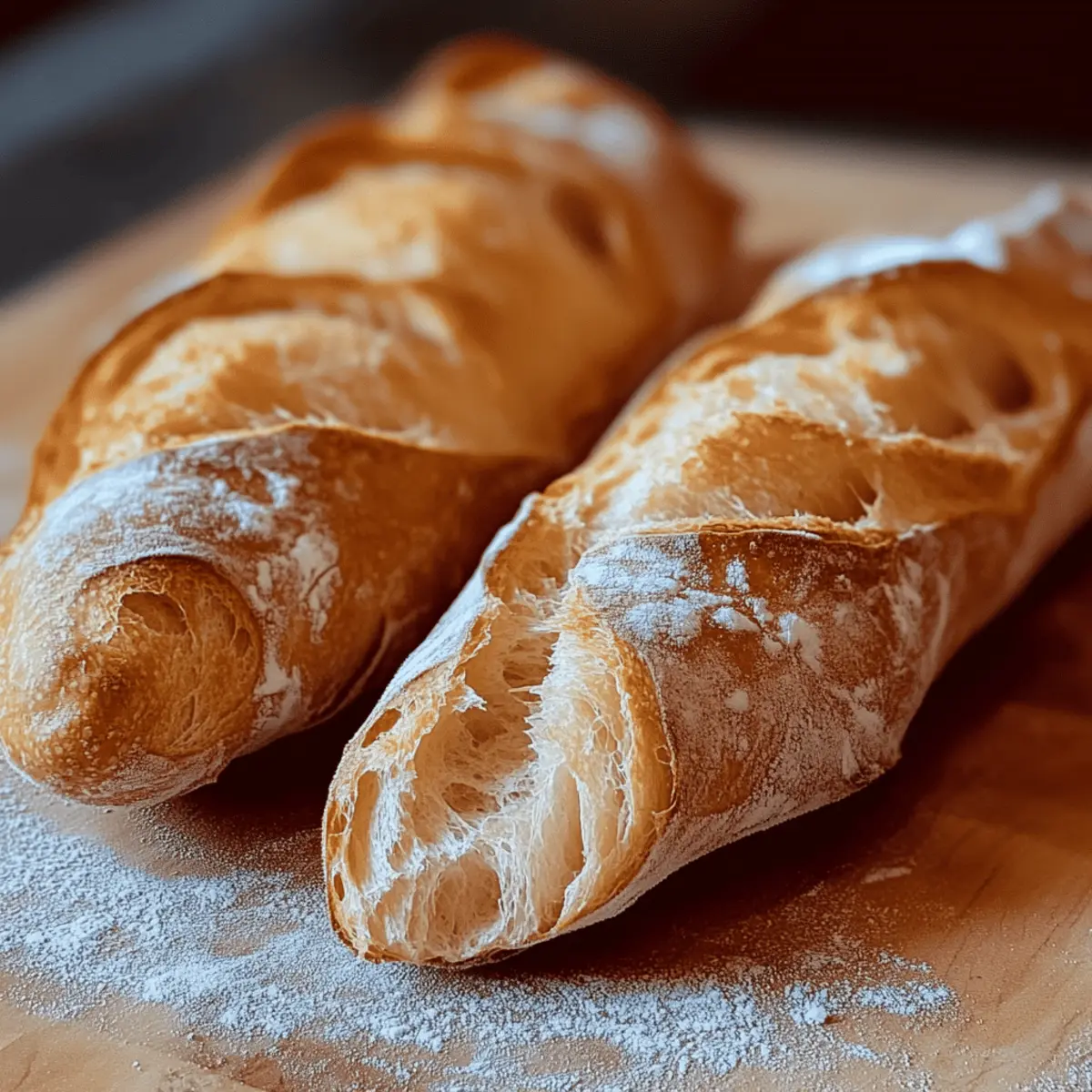
As I stood in my kitchen, the intoxicating aroma of freshly baked bread enveloped me, taking me on a delightful trip to a quaint French bakery. This Easy Homemade French Baguette recipe captures that magic while allowing you to enjoy bakery-quality bread right at home. With just a handful of simple ingredients, you can whip up these golden, crusty baguettes that are perfect for slathering with butter or crafting into a mouthwatering sandwich. The best part? They’re easy to make and boast a texture that’s both crispy on the outside and delightfully soft inside. Whether you’re a seasoned chef or just starting your culinary journey, this recipe is designed to inspire and impress, elevating your meals to a whole new level. Ready to fill your home with the warm scent of baking bread? Let’s get started!
Why Bake Your Own Baguette?
Incredible Aroma: The moment you bake this baguette, your kitchen will fill with a warm, inviting aroma that beats any store-bought option.
Easy to Master: With just a few pantry staples, you’ll be amazed at how simple the process is, perfect for both novices and seasoned chefs alike.
Effortless Versatility: These baguettes are not just for sandwiches! They shine alongside soups, salads, or on a charcuterie board, enhancing any meal.
Crowd-Pleasing Appeal: Friends and family will be impressed when they see you serving homemade bread, making any gathering feel special.
Cost-Efficient: Save money and reduce waste compared to buying baguettes from the store, while enjoying fresher, tastier loaves.
Get ready to bake your own delectable bread that’s sure to impress with this Easy Homemade French Baguette.
Homemade Baguette Ingredients
For the Dough
• All-Purpose Flour – This is the backbone of your baguette, providing structure; or swap with bread flour for a chewier texture.
• Salt – Enhances flavor and aids in gluten development; proper measurement ensures a successful rise.
• Sugar – Helps with browning and adds a hint of sweetness; can be reduced or substituted with honey or agave for different flavor nuances.
• Active Dry Yeast – The key leavening agent for a beautiful rise; feel free to use fresh yeast if you have it, adjusting the amount accordingly.
• Warm Water – Activates the yeast and brings the dough together; make sure it’s around 110°F (43°C) for best results.
For Dusting
• Cornmeal or Flour – Use this to prevent sticking on your baking surface; opt for cornmeal for a classic finish, or flour for a subtler touch.
Get ready to bring the heavenly aroma of homemade baguette into your home!
Step‑by‑Step Instructions for Homemade Baguette
Step 1: Make the Dough
In a large mixing bowl, whisk together 4 cups of all-purpose flour, 1½ teaspoons of salt, and 1 tablespoon of sugar. Meanwhile, dissolve 2¼ teaspoons of active dry yeast in 1¾ cups of warm water (around 110°F or 43°C). Allow it to foam for about 5 minutes before pouring the yeast mixture into the dry ingredients. Mix until a shaggy dough forms and the ingredients are combined.
Step 2: Knead the Dough
Transfer the shaggy dough onto a floured surface and knead it for 8 to 10 minutes until it becomes smooth and elastic. If you prefer, use a stand mixer fitted with a dough hook, kneading for 6 to 8 minutes on medium speed. Once kneaded, the dough should be soft and slightly tacky to the touch, allowing it to bounce back when poked.
Step 3: First Rise
Shape the kneaded dough into a ball and place it in a greased bowl, turning it once to coat all sides with oil. Cover the bowl with a damp cloth or plastic wrap and let it rise in a warm place for about 1 to 1½ hours, or until it has doubled in size. This is an essential step for developing the flavor and structure of your homemade baguette.
Step 4: Cold Fermentation (Optional)
For an even richer flavor, refrigerate the dough overnight after the first rise. Simply punch down the dough to expel air, then cover it tightly with plastic wrap. Allow it to cold ferment in the refrigerator for 8 to 12 hours; this time develops more complex flavors for your baguette.
Step 5: Shape Baguettes
After the dough has risen and optionally cold fermented, allow it to come to room temperature for about 30 minutes. Divide the dough into 2 to 3 equal portions, shaping each into a long loaf. Place the loaves seam-side down on a lightly dusted baking sheet, making sure to space them adequately. Cover with a kitchen towel and let them rise for another 45 to 60 minutes.
Step 6: Prepare to Bake
Preheat your oven to 475°F (245°C), placing a metal pan or cast iron skillet on the bottom rack to create steam. This step is crucial for achieving that signature crust on your homemade baguette. Allow the oven to fully preheat for at least 20 minutes to ensure it reaches the right temperature.
Step 7: Score and Bake
Using a sharp knife or a razor blade, score the tops of the loaves with several diagonal cuts. This allows steam to escape while baking. Quickly pour about a cup of hot water into the preheated pan to create steam, then place the baking sheet with the baguettes in the oven. Bake for 20 to 25 minutes until the baguettes are golden brown and sound hollow when tapped on the bottom.
Step 8: Cool
Once baked, remove the baguettes from the oven and transfer them to a wire rack. Allow them to cool completely before slicing, which helps maintain their internal structure. As the steam escapes, your homemade baguettes will develop that delightful crispy crust you’re aiming for!
What to Serve with Easy Homemade French Baguette
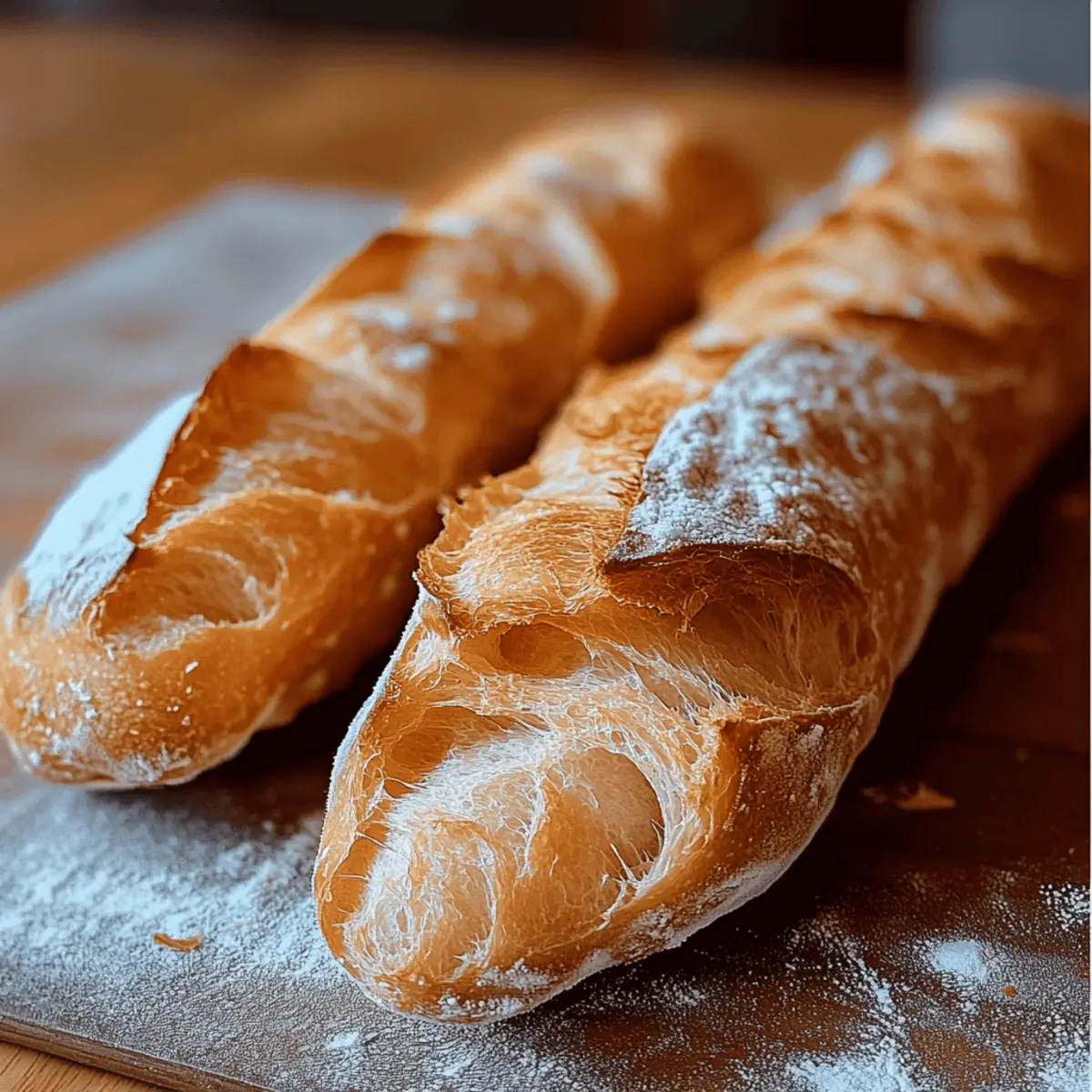
Experience the charm of a perfect meal with a crusty baguette that evokes warmth, comfort, and togetherness.
- Creamy Tomato Soup: The rich and tangy flavors of the soup beautifully complement the chewy texture of the baguette, making every bite a delight.
- Garlic Herb Butter: Spread this velvety mixture on warm baguette slices for an irresistible flavor addition that brightens up any meal.
- Classic Salade Niçoise: This fresh and colorful salad pairs perfectly with the baguette, offering a medley of textures and flavors that balances your meal.
- Cheese Platter: A selection of bold cheeses, like Brie or aged Gouda, paired with a freshly baked baguette creates a fantastic charcuterie experience.
- Roasted Veggie Medley: Sweet and earthy roasted vegetables make an excellent side dish, providing vibrant colors and tastes alongside the baguette’s crunch.
- Savory Duck Pâté: Smeared on crusty baguette slices, this rich pâté creates a luxurious appetizer that elevates your dining experience.
- Sparkling White Wine: A chilled glass of sparkling wine cuts through the bread’s richness, enhancing its flavors with a refreshing touch.
- Dark Chocolate Tart: For dessert, nothing rounds off a meal like a slice of tart paired with a delicate baguette slice – a surprising and luxurious combination!
Expert Tips for Homemade Baguette
Check Your Yeast: Ensure your yeast is fresh and activated; if it doesn’t foam after mixing with warm water, it may be dead, affecting your dough’s rise.
Knead Properly: Knead until the dough becomes smooth and elastic. Under-kneading can lead to a dense baguette, while over-kneading can make it tough.
Steam is Key: To achieve a crispy crust on your homemade baguette, create steam in the oven by adding water to a preheated pan, enhancing the bake.
Avoid Opening the Oven: Resist the urge to peek during the first 10 minutes of baking to maintain steam and temperature, both crucial for proper crust formation.
Cool Completely: Allow your baguettes to cool entirely on a wire rack before slicing. This helps set the interior and keeps the crust crisp.
Homemade Baguette Variations & Substitutions
Feel free to unleash your creativity and customize your baguette to fit your unique taste buds!
-
Herb-Infused: Add 1-2 tablespoons of finely chopped fresh herbs (like rosemary or thyme) to the dough for a fragrant twist. This infuses each bite with delightful flavor.
-
Garlic Lovers: Mix in minced garlic or roasted garlic into the dough for an irresistible savory addition. This brings a warm, rustic taste to your baguettes.
-
Whole Wheat: Replace half of the all-purpose flour with whole wheat flour for a nuttier, heartier baguette. This adjustment adds nutritional benefits and a different texture.
-
Seed Topping: Sprinkle sesame or poppy seeds on top before baking for an added crunch and nutty flavor. Enhance that artisanal look and texture with this simple touch.
-
Cheesy Goodness: Fold in shredded cheese (like Gruyère or cheddar) into the dough for a cheesy baguette perfect for dipping into soups or enjoying with butter.
-
Spicy Kick: Add a pinch of red pepper flakes to the dough for a subtle heat that elevates the flavor profile. Just enough to surprise your taste buds!
-
Sweet Touch: Incorporate a tablespoon of honey or maple syrup for a hint of sweetness that beautifully balances the savory aspects of the bread.
-
Storage Tip: For longer-lasting baguettes, freeze some cooked loaves and enjoy them later by reheating in the oven to regain that fresh-baked crunch.
While you’re experimenting, consider serving these delightful baguettes alongside your favorite soups, like a hearty tomato basil, or pair them with delicious spreads featured in our Pumpkin Cream Cold recipe for a tasty twist. The possibilities are endless with a well-baked homemade baguette!
Make Ahead Options
These homemade baguettes are perfect for meal prep, allowing you to enjoy bakery-quality bread while saving precious time during busy weeknights! You can prepare the dough up to 24 hours in advance by mixing and kneading it, then letting it rise and refrigerating the shaped loaves overnight for a cold fermentation (8–12 hours). Just remember to cover the dough tightly with plastic wrap to prevent it from drying out. When you’re ready to bake, let the baguettes come to room temperature (about 30 minutes), score, and steam bake as directed. This way, you’ll have warm, crusty baguettes fresh from the oven, just as delicious as if they were made on the spot!
How to Store and Freeze Homemade Baguette
Room Temperature: Store uncut baguettes in a paper bag for up to 2 days to maintain their crusty texture. Avoid plastic bags, as they trap moisture and make the crust soggy.
Freezer: For longer storage, wrap the baguettes tightly in plastic wrap followed by aluminum foil, and freeze for up to 3 months. This method preserves flavors and texture beautifully.
Reheating: To enjoy previously frozen baguettes, thaw at room temperature, then reheat in a preheated oven at 375°F (190°C) for about 10 minutes. This restores the crispiness that makes a homemade baguette so delightful!
Slicing Before Freezing: If you prefer, slice the baguette before freezing. This allows for quick access and reheating without the need to thaw the entire loaf.
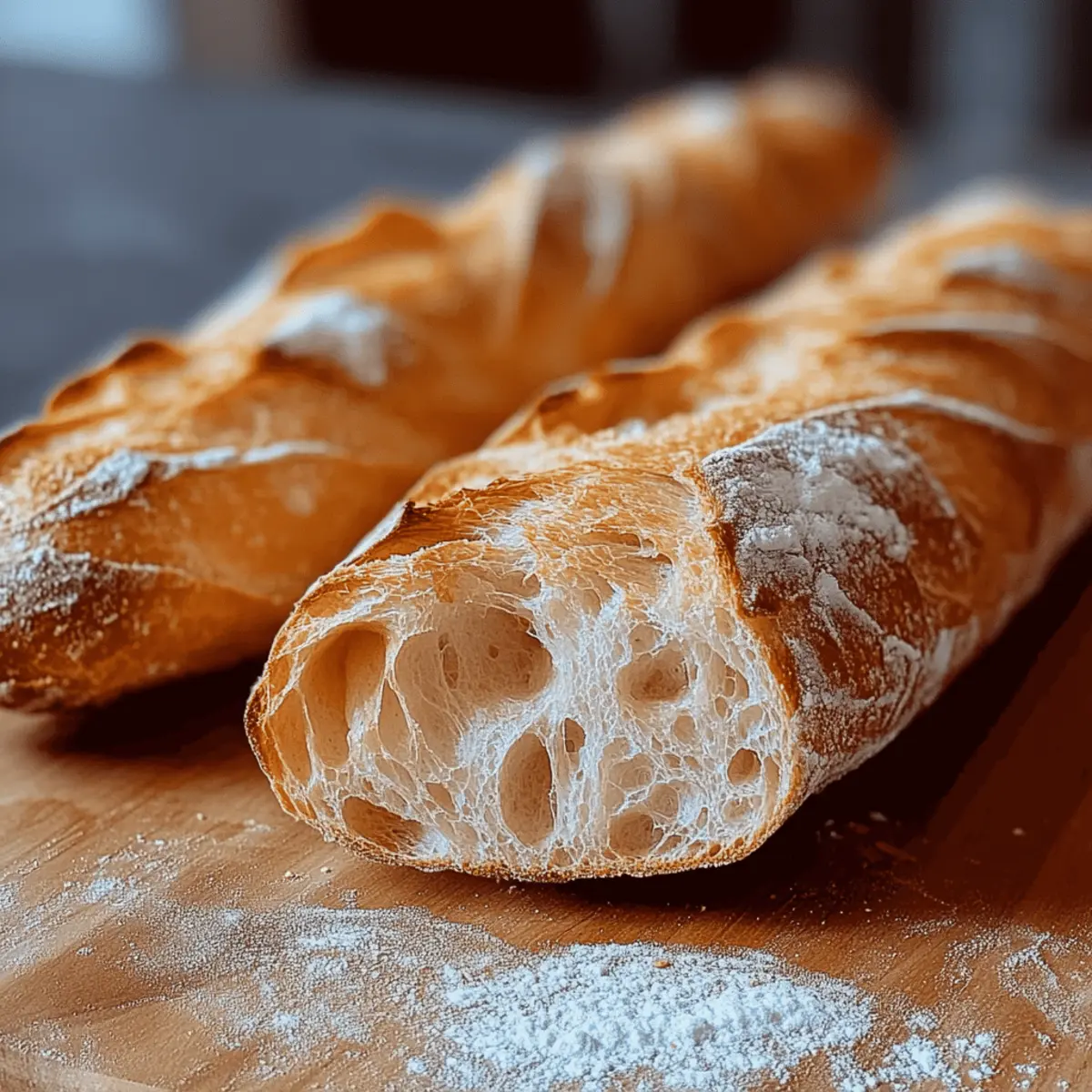
Homemade Baguette Recipe FAQs
How do I know if my yeast is fresh?
Absolutely! To check your yeast’s freshness, dissolve it in warm water (around 110°F or 43°C) with a little sugar and let it sit for about 5 to 10 minutes. If it foams up and activates, you’re good to go. If not, it’s best to get a new packet.
What’s the best way to store my homemade baguette?
For short-term storage, place your uncut baguette in a paper bag at room temperature for up to 2 days. Avoid plastic bags, which can trap moisture and make your crust soggy. If you need longer storage, wrap it tightly in plastic wrap and aluminum foil, storing it in the freezer for up to 3 months.
Can I freeze my baguette?
Absolutely! To freeze your homemade baguette, wrap it tightly in plastic wrap and then in aluminum foil to protect it from freezer burn. When you’re ready to enjoy it again, thaw it at room temperature. Then reheat it in a preheated oven at 375°F (190°C) for about 10 minutes to bring back that lovely crispiness.
What should I do if my dough doesn’t rise?
Very! If your dough hasn’t risen, first, check the freshness of your yeast, as mentioned above. Ensure you’re using warm water (not hot) to activate it. If the yeast is fresh but the dough still doesn’t rise, it’s possible that your kitchen is too cold. Try placing the dough in a warmer area or letting it rise for a longer period until it doubles in size.
What type of flour works best for a homemade baguette?
The go-to is all-purpose flour, providing a lovely structure. However, for a chewier texture, consider using bread flour. If you’re feeling adventurous, you can even mix in whole wheat flour for a heartier approach, just remember it might affect the rise and texture slightly.
Can I add herbs or other ingredients to my baguette?
Absolutely! Experimenting with flavors is a joy in baking! Feel free to mix in dried herbs, garlic, or even seeds like sesame or poppy into your dough. Just remember to adjust the dough’s hydration if you’re adding anything that absorbs moisture, like sun-dried tomatoes. Happy baking!
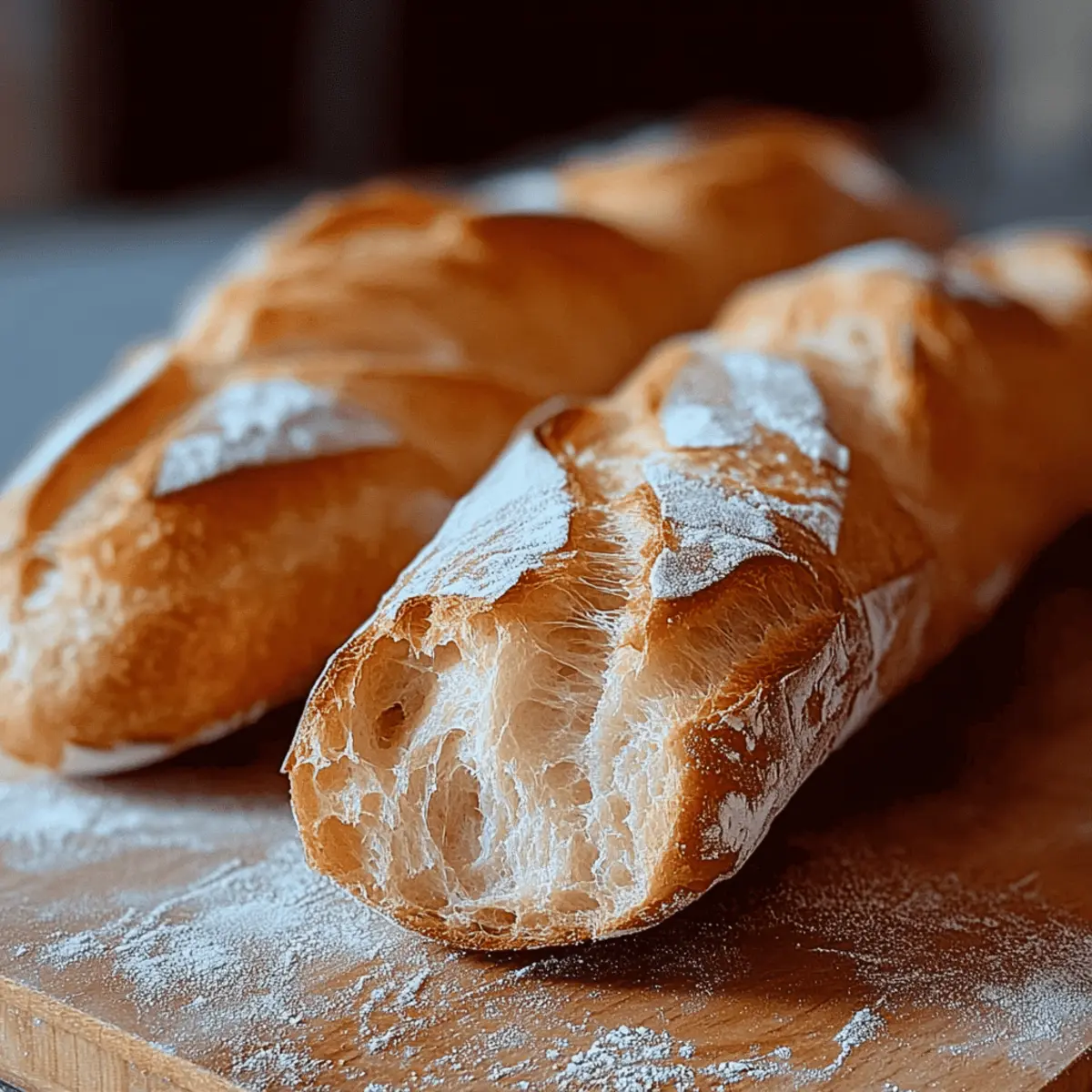
Homemade Baguette: Effortlessly Bake Bakery-Style Bread at Home
Ingredients
Equipment
Method
- In a large mixing bowl, whisk together 4 cups of all-purpose flour, 1½ teaspoons of salt, and 1 tablespoon of sugar.
- Dissolve 2¼ teaspoons of active dry yeast in 1¾ cups of warm water. Allow it to foam for about 5 minutes before pouring it into the dry ingredients.
- Mix until a shaggy dough forms and the ingredients are combined.
- Transfer the shaggy dough onto a floured surface and knead for 8 to 10 minutes until smooth and elastic.
- Shape the kneaded dough into a ball and place it in a greased bowl, cover it with a damp cloth and let it rise for about 1 to 1½ hours.
- For richer flavor, refrigerate the dough overnight after the first rise.
- Divide the dough into 2 to 3 portions, shaping each into a long loaf, and let rise for another 45 to 60 minutes.
- Preheat your oven to 475°F (245°C) and place a metal pan on the bottom rack to create steam.
- Score the tops of the loaves with several diagonal cuts and bake for 20 to 25 minutes until golden brown.
- Remove the baguettes from the oven and cool completely on a wire rack before slicing.
Leave a Reply